
disrupt, complicate, illuminate
collage mind newsletter / vol. 49 / January 2026

Dear Friends:
That thing happened again. Where I was reading something that had no relation to collage but felt like the words before me were describing it perfectly.
This time the words were from Brenna Duperron, a Métis scholar, writing about how Indigenous knowledge systems can help us read medieval texts. How they help to “expand past any narrow definitions of what constitutes scholarly practice and consider the possibility of disrupting and complicating while illuminating and complementing.”
Disrupting and complicating while illuminating and complementing.
The generative push-pull in this phrase appealed to me on a deep level. I wrote “collage!” in the margin of the page. (My marginalia tends to be enthusiastic.)
The four actions Duperron listed stuck with me. As the days passed after that a-ha reading moment, I started to notice them in the materials and practices I had been drawn to over the second half of 2025.
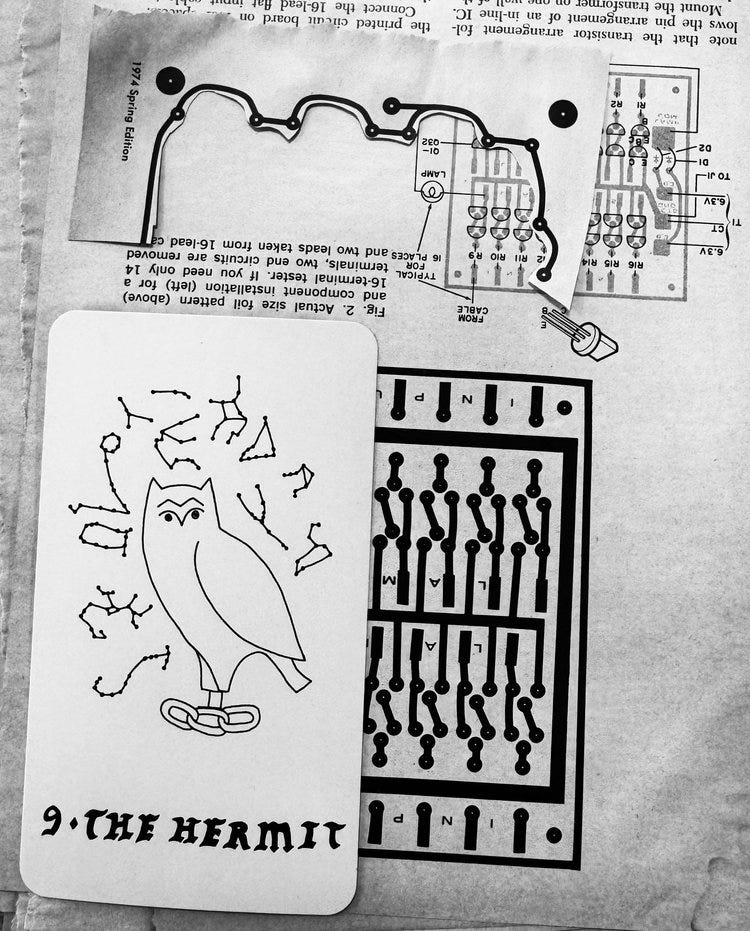
Last year, I started to use diagrams in my work. Electronic circuit boards. Constellation charts. Spirals and whirling squares. I found it helpful to look at one way of organizing images and words and ideas, and to imagine how that approach might translate into whatever I was figuring my way through. Diagrams as a way to disrupt and illuminate my own presets and habits and ways of seeing.
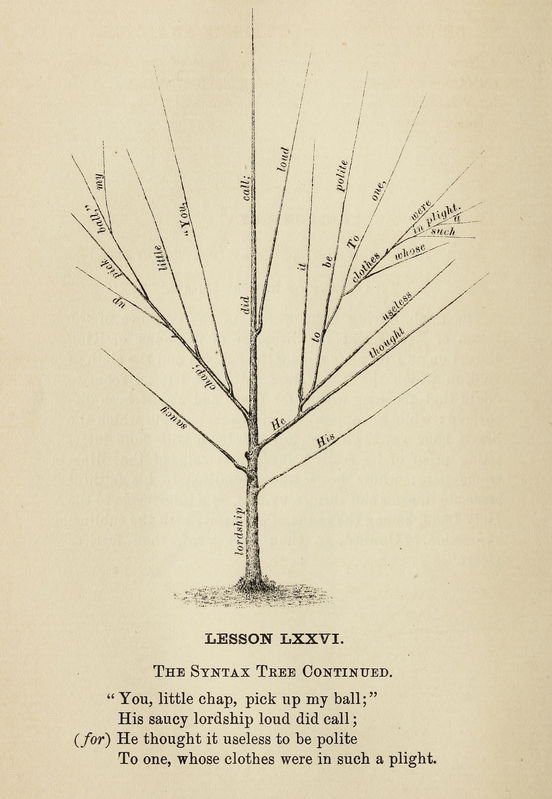
Diagrams and me, we go way back. I am a child of Catholic elementary schools, where I learned to diagram sentences. That teaching was sure as hell not encouraging disruption. Those diagrams were intended for enforcing rules of grammar and syntax. But I remember feeling an extra charge of curiosity when doing that rote work. (Which, admittedly, I loved.) I remember thinking, if I can diagram a sentence, what else can I diagram?
And then I probably got detention for staring out the window.
On the wall above my studio bench I have a diagram from Marx’s early drafts of Capital. I can’t read any of the words because it’s an already grainy reproduction from a 25-year-old copy of his biography, not to mention the words are probably in German. But the image inspires me: taking complex ideas and distilling them visually. And the reverse: taking seemingly simple ideas and showing their complexity, illuminating what often remains unseen.
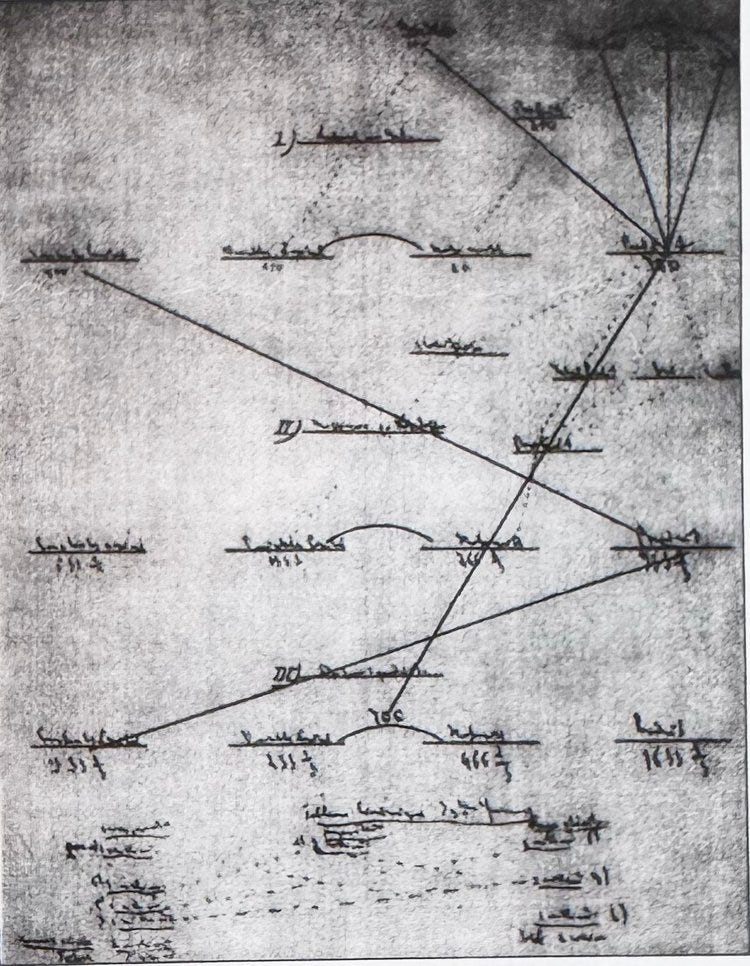
I’ve toyed around with using these lines and angles to map a collage, but I rarely work that directly and literally. Instead, I let Marx’s diagram work through osmosis. It moves a subtle, invisible hand as I work. Creates a kind of ghostly footnoting. I am thinking “diagram” in the back of my mind while sorting through my piles of paper.
Maybe, in this way, all of my collages are diagrams.
A diagram asks us to slow down, consider the parts, and consider the relationship among parts. It illuminates a system that might otherwise be invisible.
And when art meets diagram, meaning goes beyond the functional. It involves web-like association, metaphor, otherworldly logic.
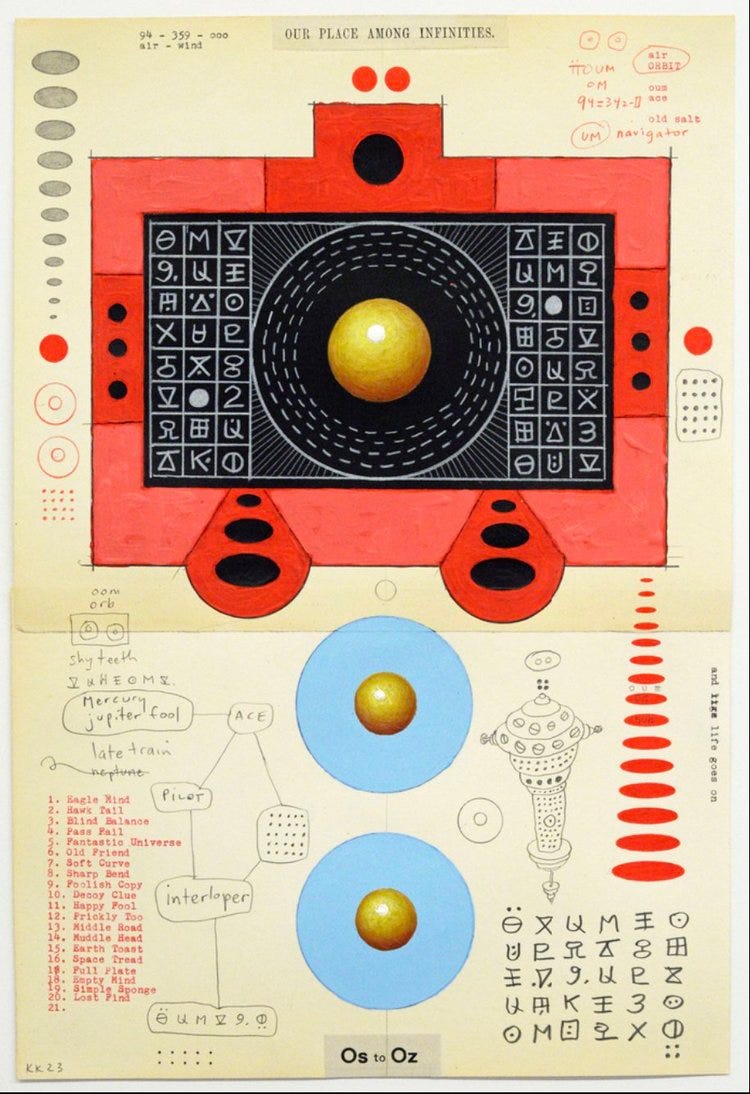
The work of Karla Knight might be my favorite example of this kind of diagram. Meaning is both precise (Mercury jupiter fool — ACE) and elusive (what?). It disrupts and complicates while illuminating and complementing. It invites the viewer to expand their vision, to consider knowledge as a dynamic, malleable process, to see multidirectional complexity.
Let’s call it a poetic diagram. A visionary diagram. A diagram that encourages question asking. That runs on the energy of “what if.”
I have this hope that if we flood the world with poetic, visionary diagrams, with art that asks “what if” in ways that expand consciousness and help us slow down and ask critical questions, things will get better. People will seek expansion rather than reduction. People will turn away from fascist fear and towards liberatory imagination.
It’s a tall order right now, I know.
N O T E S + N E W S
- The reading I reference above is Brenna Duperron’s “Ghostly Consciousness in The Book of Margery Kempe“ from English Language Notes vol. 58 no. 2 October 2020, pp. 121-135. It’s an inspiring piece of scholarship on many levels. Happy to send anyone interested in reading it a PDF.
- I loved this short artist talk by Cindy Rehm about her work made as the 2025 Artist-in-Residence at the Internet Archive. Feminist history, cats, and collage — sign me up. The timestamp of the talk is 15:24 to 22:55.
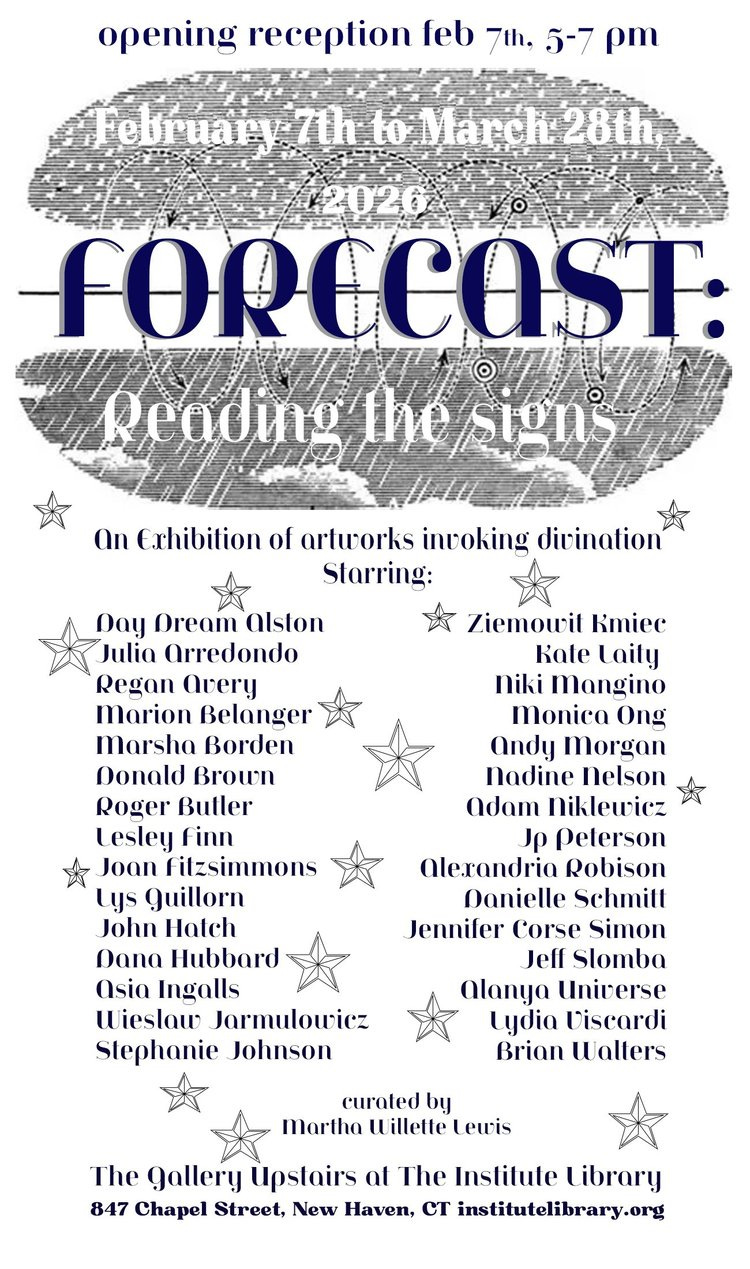
- Next month I’ll be showing work at The Institute Library in New Haven as part of Forecast: Reading the Signs, an exhibition of artworks exploring divination and prediction curated by Martha Willette Lewis. I predict the group show magic will be strong with this one and am looking forward to it.
Yours,
Lesley
I love what you are up to Lesley! Looking forward to catching up.
Thank you for this! Still digesting, and so good!